|
|


| Home |  |
Overview
|
|
This is Barloworld
|
|
Leadership review
|
|
Strategic framework
|
|
Financial returns
|
|
Governance review
|
|
Assurances
|
| Currently viewing: Investing in sustainable development / Next: Investing in empowerment and transformation |
Investing in sustainable development
Overview Sustainable development incorporates a wide range of aspects which include leveraging emerging commercial opportunities through the provision of integrated solutions that enable customers to realise their own sustainable development objectives, including minimising their environmental impacts. These solutions incorporate energy and emissions-efficient vehicles, plant and equipment, as well as optimal supply-chain management. These aspects are covered throughout the report; in this section we focus on our value chain and environmental stewardship. Internally, we focus on conducting our operations in an environmentally responsible manner and reducing our consumption of non-renewable resources. We have implemented an aspirational non-renewable energy consumption and greenhouse gas emissions (scope 1 and 2) efficiency improvement target, and focus on water conservation and stewardship including recycling and rain-water harvesting. These initiatives support organisational resilience in the context of rising costs, regulatory and supply constraints. Extensive component rebuild and remanufacture activities in our Equipment division conserve non-renewable resources. Our waste management capabilities have been enhanced with our investment in re-, an environmental solutions company, which supports our internal initiatives and expands our customer offerings. Responsible value chain Given the nature of our business and sustainability principles, it is important to align ourselves with a robust supply chain, responsible leading principals and Original Equipment Manufacturers (OEMs). Relationships throughout our supply chain are based on mutual respect, trust, support and benefit, guided by our governance and ethical frameworks. The group will disengage from elements of its supply chain that do not conform and is developing a set of conduct criteria and standards for suppliers which will form part of a supplier due diligence initiative. Integral to our value chain is our commitment to being a leader in sustainable development and identifying competitive advantages through solutions that help customers achieve their sustainability objectives, facilitate a transition to lower carbon economies and expand into related opportunities. Aside from OEMs, Barloworld sources goods and services from a range of other service providers. This is particularly important in South Africa where integrating previously disadvantaged groups into the economy is a key socio-economic driver. Through our South African-oriented enterprise development initiatives and preferential procurement programme, we support and empower small and medium-sized suppliers, contractors and enterprises in our supply chain. We are committed to the localisation and empowerment of our supply chain where practicable, and have commenced with supplier development engagements in South Africa. Responsible principals Barloworld represents leading international OEMs and brands such as Caterpillar, Hyster, Avis, Audi, BMW, Ford, General Motors, Jaguar Land Rover, Mazda, Mercedes-Benz, Toyota, Volkswagen, Massey Ferguson, Challenger and others. The group is therefore part of supply chains that reflect international best practice in the manufacture, sale, service, support and disposal of products. These standards are complemented by Barloworld’s own ethics, values and standards. We are committed to working with suppliers to ensure our customers’ objectives are met and their competitive position enhanced. Products and services Leading customer solutions offered by Barloworld assist customers in achieving their sustainable development objectives. Barloworld’s divisions have business models that enable vehicles, plant and equipment solutions to be provided as new or used units or rented on a long or short-term basis. In the Equipment division this is augmented by a significant component rebuild programme. This business model ensures efficiencies and synergies throughout the lifecycle of equipment, plant and vehicles and extended useful lives for these products. Logistics offers a wide range of supply-chain optimisation products that include energy-efficient transport solutions that also minimise carbon footprints. Customer health and safety Customer health and safety are critical aspects of all Barloworld’s products, services and customer solutions. In representing leading global brands, our customer solutions are backed by warranties, guarantees and product responsibility, as well as unique design features that target optimum user safety and productivity. Customer satisfaction High levels of customer engagement and exceeding their expectations have allowed us to build loyalty and grow our customer base. Customers are central to our business model and critical to the ongoing success of Barloworld. All divisions have extensive customer engagement initiatives in place to understand customer requirements, their expectations for products and services, as well as service levels. Initiatives include stringent measurement and survey systems, as well as targets and in some instances, agreed performance measures. Performance against objectives is monitored and reviewed, highlights areas for attention, directs operational activities and informs strategy. Marketing communications Group standards ensure that all marketing and advertising conforms to applicable laws and standards. The standards and corporate identities set by principals are adhered to. These are detailed and comprehensively monitored by Barloworld divisional operations and their principals. Any local adaptations require prior consent from principals. We are also guided by the standards set by industry bodies.
Reducing our environmental footprint and managing our impact Barloworld is committed to responsible environmental stewardship and minimising its environmental footprint. These aspects underpin the group’s response to climate change and are incorporated into sustainable development, one of the group’s six Strategic Focus Areas. We recognise that some of our activities have certain adverse environmental impacts such as those associated with the use of fossil fuels, and therefore mitigation measures are integrated into our operational management systems and customer offerings. We mainly represent OEMs and recognise the environmental impact from the manufacture and use of our vehicles, plant and equipment. As a responsible corporate citizen, we engage our suppliers and customers and strive to achieve the highest environmental standards. Our approach to identifying material environmental issues Material environmental issues are identified through a process involving the Barloworld executive and the group’s risk and sustainability committees. This report covers such material issues. Responding to the CDP’s Climate Change and Water disclosures, participation in the JSE’s SRI Index and other external surveys contribute to the identification of these issues. Internally, aspects identified as material are:
The Energy Efficiency Pledge Barloworld signed the National Business Initiative’s Energy Efficiency Pledge in 2012 together with the South African Department of Energy. By signing the pledge, Barloworld undertook to work with the Energy Efficiency Leadership Network to drive continuous improvement of energy efficiency initiatives across the group. Policies Barloworld’s approach to climate change and environmental stewardship is informed by its:
Overview of environmental risk management and responses Risks identification and response are key to the sustainability and longevity of our business. Environmental risks are identified and assessed through:
Key indicators Data collection is designed to enhance the management and reporting of material environmental aspects using entrenched structures and systems. Indicators cover identified material issues and other aspects that require management attention. Monitoring and management Reported environmental data is used in the daily management of the company. Material and relevant group aspects are reported at board level on a quarterly basis through the risk and sustainability committee’s Safety, Health and Environment (SHE) report. Data collection and reporting processes are reviewed throughout the year by Barloworld group internal audit services and selected indicators are assured at financial year-end by the group’s external auditors.
To further integrate non-financial reporting within the group, consideration is being given to a more robust non-financial reporting platform that will enhance management of these aspects at an operational level. Our Australian motor retail interests were disposed of in two separate transactions effective October 2013 and March 2014. Consequently, these operations are classified as discontinued operations and have been excluded from the environmental-related disclosures. Disclosure of continuing and discontinued operations is made in Barloworld’s online GRI responses (http://www.barloworld-reports.co.za/ integrated-reports/ir-2014/gri-index/index.php). Targets In 2009, we set the aspirational group target of a 12% efficiency improvement in non-renewable energy consumption and greenhouse gas emissions (scope 1 and 2) by the end of this financial year off a 2009 baseline. This aspirational target was against a business-as-usual scenario that tracks revenue as a proxy for business activity. Although we did not achieve our target, it played a significant role in focusing attention and prompting relevant initiatives which benefited the group over the past five years and will continue to do so into the future. Initiatives prompted by our aspirational target included: measurement, avoidance, reduction, switching to appropriate alternate sources and technologies where feasible, and offsetting emissions from commercial activities where appropriate. Addressing our material issues and progress Energy consumption Given the increasing energy costs and energy supply challenges, Barloworld recognises the economic importance and environmental relevance of non-renewable energy consumption and strives to improve the group’s efficiency and consumption patterns. We have adopted the measure, avoid, reduce, switch and offset (MARSO) approach in pursuit of our energy efficiency objectives. Group electricity consumption decreased by 1% and combined petrol and diesel consumption increased by 7% over 2013. Energy consumption (GJ) by energy source
Energy consumption was 6% up over 2013. Energy consumption (GJ) by division
Performance against aspirational energy efficiency target The majority of our operations have performed ahead of our aspirational group target of a 12% efficiency improvement for non-renewable energy consumption set for the end of this financial year off a 2009 baseline. However, our overall group target was not achieved due mainly to a number of investments made in logistics road transport businesses, which have higher energy and emissions intensities compared to our other businesses. Nonetheless, this target played a major role in focusing our efforts on energy efficiency with significant benefits for the organisation. This has impacted the group’s energy mix and profile, resulting in the group being 12% worse than its 2009 baseline intensity (42.6) and 27% above the aspirational 12% efficiency improvement target (37.5). Energy intensity by division (GJ per R1 million revenue)
Greenhouse gas emissions We are concerned about climate change and appreciate the impact of greenhouse gas emissions on global warming. Restrictions on emissions and proposed carbon taxes pose risks to Barloworld and our value chain, including our customer base. However, these also present opportunities such as increased demand for products and solutions with limited or reduced carbon emissions, and opportunities for internal initiatives to further improve energy and emissions efficiency with related cost savings. The group continues to report greenhouse gas emissions in terms of the GHG Protocol Corporate Standard and in units of CO2e, the universal unit measure adjusted for the global warming potential of the six Kyoto Protocol greenhouse gases. Emissions from customer use of our rental fleets are classified as scope 3 emissions. Emissions (tCO2e) by energy source (scope 1 and 2)
Emissions (tCO2e) by division (scope 1 and 2)
Since our material greenhouse gas emissions are linked to energy consumption (particularly petrol and diesel and, indirectly, electricity principally generated from coal), many of our energy efficiency initiatives have a secondary benefit of reducing greenhouse gas emissions. Performance against aspirational emissions efficiency target Our emission patterns follow those of our energy consumption, again reflecting good progress being made by our various businesses against their respective baselines. Similar to their energy intensity profile, our expanding Logistics operations have an increased emission intensity level, which impacts the group’s intensity level, although not to the same extent as the impact on energy intensity due to the relatively lower increase in Logistics’ emissions. This has resulted in the group being 4% better than its 2009 baseline intensity (4.6) and 10% worse than the aspirational 12% efficiency improvement target (4.0). Emissions (scope 1 and 2) intensity by division (tCO2e per R1 million revenue)
Scope 3 emissions Recognising our broader activities and the nature of our products and solutions, we report certain scope 3 emissions. These cover business air travel and, since 2010, we have reported the emissions from Avis Rent a Car’s South African rental fleet. Car rental operations in South Africa produced 93 676 tCO2e (2013: 85 918 tCO2e), an increase of 9% from 2013, resulting in a 3% improvement in intensity per rental day. Since the 2013 financial year we initiated processes to report emissions from other significant rental fleets. These processes are being refined and disclosure will be considered in due course. Water consumption Although a limited consumer of water, Barloworld recognises the general scarcity of the resource and strives to use water efficiently and responsibly. Water stewardship initiatives within the group include increased recycling, rain-water harvesting and efficiency of use. These initiatives have resulted in a 6% decrease in consumption in 2014. Water consumption (ML) by division
Most water is sourced from municipal and local government supply systems and used to wash vehicles, plant or equipment. After passing through filtration and separation processes, effectively all water used is legally discharged back into municipal and local government systems. Overall, 16.7% of water was recycled in the group, with Automotive and Logistics recycling 26% and Equipment operations in Iberia recycling 4% of their reported consumption. No protected areas were affected by water discharges from the group, nor were any water sources affected by our withdrawal of water in the past year. Given that not all group operations are situated in water- stressed or water-scarce areas, water is managed on a decentralised basis and as such, no group-wide water efficiency targets have been set. Despite this, divisions may, where appropriate, set such targets. Waste management Given the nature of our business, the group does not generate significant volumes of waste. That which is generated is monitored by type, volume, disposal method and destination. These systems are evolving and improving, particularly in Equipment Russia, where limited reporting is currently in place. Most waste is disposed of through certified contractors and no waste was shipped internationally. Difficulty has been experienced in obtaining appropriately certified waste-disposal companies in certain developing territories and solutions are being sought to address this aspect. Paper, tyres and oil filters constitute most of our solid waste and lubricants make up most of our liquid waste. Most waste generated within the group is recycled. An important aspect of our waste management and product lifecycle stewardship is extending product use or life. We make the most significant contribution through the rebuilding and remanufacturing of machines and components. In Caterpillar operations, these processes require some 50% to 60% less energy by reusing approximately 85% to 95% by weight of materials from the original product. Overall, some 70% of Caterpillar components are rebuilt. Waste by category
Spills While there were no significant spills during the period, there were a number of minor spills which were properly attended to and, in all instances, our internal response mechanisms and processes functioned as intended. Outlook
Barloworld strives to be responsive to the needs of the communities in which we do business and therefore support for human rights and positive societal change go to the heart of the history of the organisation. Visionary leadership has played a vital role in embedding a social conscience in the group. Central to the nature of our relationships with our stakeholders, the products and service solutions we offer, as well as our corporate social investments (CSI), is the belief that, through responsible corporate citizenship, corporations can and should contribute to the betterment of society within their spheres of influence. We also subscribe to internationally recognised ethical principles, such as those of the United Nations Global Compact to which we are a signatory. We invest resources in social initiatives which contribute to the development and wellbeing of the communities in the countries in which we do business. In South Africa, the primary focus through the Barloworld Trust is on efforts to improve the education system and positively impact teaching and learner outcomes. Initiatives are driven through development partnerships with organisations in civil society, the communities they serve, other members of the business community – including some of the group’s key customers and suppliers – and the public sector. On this basis, Barloworld participates in multi-sector partnerships such as Business Leadership SA, the National Business Initiative and the Programme to Improve Learner Outcomes (PILO), among others, the scale and purpose of the partnerships being what makes them successful. At group level, the organisation is committed to contributing at least one percent of our worldwide net profits after tax to social investments. A group CSI policy is reviewed annually by the board, with operational guidelines and a group-wide reporting regime in place. The Barloworld Trust and operations’ CSI programmes attempt to address the foremost problems in society, are aligned with national development objectives and industry issues, and involve local communities. In South Africa, the socio-economic development (SED) imperatives of broad-based black economic empowerment are incorporated into this approach. Some key group stakeholders in 2014 are Afrika Tikkun and Ikamva Labantu, which are community service organisations in our empowerment transaction, for their work in early childhood development, PILO, LEAP Science and Maths Schools, the Penreach whole school development programme, REAP (Rural Education Access Programme), Thandulwazi Maths and Science Academy, Teach South Africa and BRIDGE. Outlook We believe playing a positive role in our societies is essential for our sustainability, and we therefore favour a partnership approach to social and socio-economic development, seeking synergies between our divisions, with civil society, with organisations in our supply chains, governments and social partners, to increase cooperation, integrate efforts and achieve impacts at scale. Initiatives will continue to be aimed at improving the prospects and quality of life of the communities in which we do business. The Barloworld Trust will continue to follow a developmental approach to CSI and invest in interventions aimed at improving teaching and learner outcomes in South Africa which could, at scale, impact the education system.
|
||||||||||||||||||||||||||||||||||||||||||||||||||||||||||||||||||||||||||||||||||||||||||||||||||||||||||||||||||||||||||||||||||||||||||||||||||||||||||||||||||||||||||||||||||||||||||||||||||||||||||||||||||||||||||||||||||||||||||||||||||||||||||||||||||||||||||||||||||||||||||||||||||||||||||||||||||||||||||||||||||||||||||||||||||||||||||||||||||||||||||||||||||||||||||||||


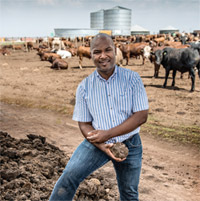 The Bronkhorstspruit Biogas Power Plant is an independent power producer (IPP) being developed by Bio2Watt, which has a contract for the purchase of waste from Beefcor, a cattle feedlot in Boschkop, Bronkhorstspruit. Approximately 40 000 tons per annum of cattle manure will be the primary waste-stream, feeding two anaerobic digesters that will produce the biogas for a combined heat and power application, using Cat internal combustion gas generator sets.
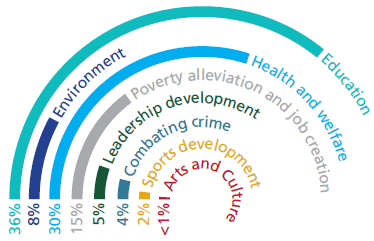
 A group CSI forum facilitates the sharing of CSI initiatives
across business units. Our multi-year donations-in-kind to
the Nelson Mandela Children’s Hospital currently under
construction in Parktown, Johannesburg, South Africa,
are a case in point.
 The Enactus organisation believes human progress
depends on our ability to tap into the entrepreneurial
spirit that lives within each of us and channel the
unique talents, passions and ideas we each possess
toward creating good in the world. It is committed
to using the power of entrepreneurial action to
transform lives and shape a better, more sustainable
world.
|