
Governance and ethics
Governance framework
The company’s governance framework supports our strategic focus areas. The board plays a pivotal role in strategy planning and establishes clear benchmarks to measure the company’s strategic objectives. It ensures that a sound structure and governance framework that will enhance good corporate governance, improve internal controls and company performance is in place. In carrying out company priorities the board ensures the existence of the necessary committee structures, including the executive committee, with clear terms of reference that assist it in discharging its responsibilities. This is cascaded down in the business to subsidiary and divisional levels to ensure that the business is also provided with structure within which management can operate effectively.
The group applies the governance principles contained in King III and continues to further entrench and strengthen recommended practices in our governance structures, systems, processes and procedures.
Following the launch of King IV in November 2016, the company is in the process of reviewing application of current principles to align with King IV.
Role and function of the board
The board functions in accordance with the requirements of King III and within the context of the Companies Act, the Listings Requirements of the JSE Limited and other applicable laws, rules and codes of governance. The board is responsible for, among other things, the governance of risk and information technology, and has ensured that the company has an effective, independent audit committee and an effective risk-based internal audit function.
The general powers of the directors are set out in the company’s Memorandum of Incorporation. The directors have further unspecified powers and authority for matters that may be exercised and dealt with by the company, which are not expressly reserved to shareholders of the company in a general meeting.
The board always acts consistently in its duties of care, skill and diligence as well as its fiduciary duties.
Ethical leadership
The board provides effective leadership based on a principled foundation and the group subscribes to high ethical standards. Responsible leadership, characterised by the values of responsibility, accountability, fairness and transparency, has been a defining characteristic of the company since its establishment in 1902.
The fundamental objective has always been to do business ethically while building a sustainable company that recognises the short and long-term impact of its activities on the economy, society and the environment.
The group is governed by the Barloworld Worldwide Code of Conduct and Code of Ethics. The Code of Ethics requires Barloworld directors, management and employees to obey the law, to respect others, to be fair, honest and to protect the environment. The Worldwide Code of Conduct articulates Barloworld’s commitment to doing business the right way, according to best practices, guided by our values.
Respected corporate citizenship
The board and management recognise that Barloworld is an economic entity and also a corporate citizen. As such, it has a social and moral standing in society with all the attendant responsibilities. Further information on respected corporate citizenship is provided in our corporate social investment (CSI) report on page 93.
Compliance with laws, rules, codes, regulations and standards
The board is responsible for ensuring that the group complies with applicable laws and considers adhering to non-binding rules, codes and standards. The board recognises that the group’s operations are located in many jurisdictions which are at different levels of maturity and in which the rule of law exists in varying degrees.
Barloworld is listed on the JSE Limited and maintains secondary listings on the London Stock Exchange (LSE) and the Namibia Stock Exchange. The board annually confirms that the company complies with the Listings Requirements of the JSE Limited.
Composition of the board
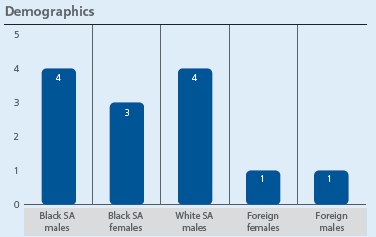
Considerable thought is given to board balance and composition. Collectively, the board believes the current mix of knowledge, skill and experience meets the requirements to lead the company effectively. The board has 13 directors, comprising eight non-executive directors and five executive directors.
The board comprises a majority of non-executive directors. The board has evaluated the rationale and meaning of the requirements of independence of directors in accordance with King III. An assessment of the salient factors and unique circumstances of each non-executive director is performed annually. The independence of non-executives who have served on the board for longer than nine years is also assessed annually. The board is satisfied that seven of the eight non-executive directors are independent. Mr Isaac Shongwe is not regarded as independent in terms of King III as he was a member of the management executive team in the last three years.
Messrs Peter Bulterman, Dumisa Ntsebeza, Steven Pfeiffer and Clive Thomson are required to retire by rotation in accordance with the Memorandum of Incorporation (MOI) at the forthcoming AGM. Peter Bulterman, Steven Pfeiffer and Clive Thomson have not offered themselves for re-election and will accordingly retire at the AGM. Peter Bulterman continues in his position as chief executive of Barloworld Equipment. Dumisa Ntsebeza has made himself available for re-election. The board has evaluated his performance and independence, and accordingly recommend him to shareholders for re-election.
 |
 |
 |
Chairman and chief executive
The responsibility for running the board and executive responsibility for conducting the business are differentiated. The chairman of the board, Adv Dumisa Ntsebeza SC, is an independent non-executive director and the chief executive, Mr Clive Thomson, is an executive director. The chairman is responsible for leading the board, ensuring its effectiveness and setting its agenda. The chief executive leads the executive team in running the business and coordinates proposals for consideration by the board.
Board appointment process
To ensure a rigorous and transparent procedure, any new appointment of a director is considered by the board as a whole, on the recommendation of the nomination committee. The selection process involves considering the existing balance of skills and experience and a continual process of assessing the needs of the company.
Board meetings and attendance
Board meetings are convened by formal notice incorporating a detailed agenda and relevant written proposals and reports. Information is distributed in good time before board meetings to enable adequate preparation. Decisions not taken at a board meeting are adopted by way of written resolutions in accordance with the company’s Memorandum of Incorporation and these are tabled for noting at each subsequent board meeting.
When directors are not able to attend in person, video and teleconferencing facilities allow them to participate fully. The board meets as scheduled and, where necessary, special meetings are held to deal with specific aspects.
| Board | Responsibilities | Membership | Meetings attended | ||||||||||||||||||||
| During the 2016 financial year, the board fulfilled the following functions in accordance with its mandate: | |||||||||||||||||||||||
| Board |
|
DB Ntsebeza (Chairman)
|
6/6 |
||||||||||||||||||||
| FOCUS AREAS FOR 2017 | |||||||||||||||||||||||
|
|||||||||||||||||||||||
Board committees
The board has established six standing committees with delegated authority from the board. Each board committee is chaired by an independent non-executive director.
These committees play an important role in enhancing good corporate governance, improving internal controls and thus, the performance of the company. Each board committee acts according to written terms of reference which are reviewed annually and approved by the board.
| Committee | Responsibilities | Membership | Meetings attended | ||||||||||||||||||||||
| During the 2016 financial year, the committee had, in addition to the statutory functions prescribed in the Companies Act and other regulations, focused on the following: | |||||||||||||||||||||||||
| Audit |
|
SS Ntsaluba (Chairman)
|
6/6 |
||||||||||||||||||||||
| FOCUS AREAS FOR 2017 | |||||||||||||||||||||||||
|
|||||||||||||||||||||||||
| Committee | Responsibilities | Membership | Meetings attended | ||||||||||||||||
| Social, ethics and transformation |
|
SS Mkhabela (Chairman) |
4/5 |
||||||||||||||||
| FOCUS AREAS FOR 2017 | |||||||||||||||||||
|
|||||||||||||||||||
| Committee | Responsibilities | Membership | Meetings attended | ||||||||||||||||||||||||||||||||||||||
| Remuneration |
|
SB Pfeiffer (Chairman)
|
|
||||||||||||||||||||||||||||||||||||||
| FOCUS AREAS FOR 2017 | |||||||||||||||||||||||||||||||||||||||||
|
|||||||||||||||||||||||||||||||||||||||||
| Committee | Responsibilities | Membership | Meetings attended | ||||||||||||||||||
| Nomination |
|
DB Ntsebeza (Chairman)
|
6/6 |
||||||||||||||||||
| FOCUS AREAS FOR 2017 | |||||||||||||||||||||
|
|||||||||||||||||||||
| Committee | Responsibilities | Membership | Meetings attended | ||||||||||||||||||||
| Risk and sustainability |
|
NP Dongwana (Chairman)
|
4/4 |
||||||||||||||||||||
| FOCUS AREAS FOR 2017 | |||||||||||||||||||||||
|
|||||||||||||||||||||||
| Committee | Responsibilities | Membership | Meetings attended | ||||||||||||||||||||||||||||||||||||||||||||
| General purposes |
|
DB Ntsebeza (Chairman)
|
|
||||||||||||||||||||||||||||||||||||||||||||
| FOCUS AREAS FOR 2017 | |||||||||||||||||||||||||||||||||||||||||||||||
|
|||||||||||||||||||||||||||||||||||||||||||||||
Executive committee
The company has an established executive committee (Exco) which is not a committee of the board. Exco comprises nine members, led by the chief executive. Exco meets on a regular basis and guides the chief executive in managing the day-to-day business of the group, monitors business performance against established best management practices and functional standards and acts as a medium of communication and coordination between business units, group companies and the board.
Board and committee performance assessment
The performance of the board as a whole and the board committees individually is appraised annually. The recent performance assessment indicated that the board and the board committees are performing their duties and responsibilities effectively and efficiently.
Company secretary
Ms Lerato Manaka is the company secretary, duly appointed by the board in accordance with the Companies Act and the JSE Listings Requirements. The company secretary is not a director of the company.
The board of directors annually considers and is satisfied that the company secretary is properly qualified and experienced to carry out the duties and responsibilities of a company secretary and that there is an arm’s length relationship between itself and the company secretary.
The directors of the company have unrestricted access to the company secretary for advice on matters of governance and other services. The company secretary provides the board as a whole and directors individually with guidance on discharging their responsibilities.
Risk management process
A written risk management philosophy issued by the chief executive and endorsed by the directors states that the company is committed to managing its risks and opportunities in the interests of all stakeholders. An ongoing systematic enterprise-wide risk assessment process supports the group philosophy. Divisional boards and senior managers conduct ongoing self-assessment of risk to identify critical business, operational, financial and compliance exposures and the adequacy and effectiveness of control factors. The group risk department oversees strategic direction and continual improvement in methodology and process, as well as providing technical assistance.
Internal audit
The purpose, authority and responsibility of the internal audit function is defined in the internal audit charter that is consistent with the Institute of Internal Auditors’ definition of internal auditing, and the principles of King III. The charter is updated and approved by the board annually. Internal audit follows a risk-based audit approach. In line with the integrated risk and assurance approach, internal audit continues to liaise with the risk and compliance managers and other assurance providers to maximise efficiencies in assurance on critical risks.
Integrated risk and assurance

Assurance matrix
| Reporting aspect assured |
Independent assurance providers |
Scope of review |
Framework/ standard |
Output | Frequency |
| Annual financial statements | External audit (Deloitte) | Annual financial statements audit |
|
External audit opinion | Annual |
| Interim financial results |
External audit (Deloitte) |
Review of interim financial results |
|
Assurance statement | Annual |
| Internal controls and risk management process | Barloworld group internal audit External audit (Deloitte) |
Review of risk management, operational and non-financial reporting processes |
|
Internal audit opinion on the adequacy and effectiveness of controls and risk management processes | Annual |
| Internal financial controls | Barloworld group internal audit External audit (Deloitte) |
Assurance on the adequacy and effectiveness of financial controls |
|
Internal audit opinion on financial controls External audit reports |
Annual |
| Key non-financial indicators | External audit (Deloitte) |
Assurance on selected key non-financial performance indicators |
|
Assurance report |
Annual |
| Black economic empowerment rating | Empowerdex |
Verification of empowerment status |
|
Empowerment rating certificate |
Annual |
Relationship with stakeholders
The company is a strong proponent of transparency, best practice disclosure, consistent communication and equal and timely dissemination of information to stakeholders. It encourages the active participation of relevant stakeholders at general meetings and maintains an investor relations programme which, inter alia, arranges regular meetings between corporate and divisional executives, shareholders, potential investors and other relevant stakeholders. Further information on how we create value for our stakeholders is provided in our stakeholder report.